About the Camino de Santiago
“Why do people walk the Camino today?
To know what it means to walk such a great distance. To be part of an ancient tradition. To escape the stress of modern life and slow down time…”
Please read on for an informative Q+A with author Robert Ward.
1. What is the Camino de Santiago?
Camino is Spanish for road, and the Camino de Santiago is Europe’s greatest living pilgrimage road, a path beaten across Spain to the shrine of Saint James by a thousand years of footsteps. In reality, there are many caminos to Santiago; the one most pilgrims follow is also known as the Camino Francés, the “French” Camino, since that is where it originates.
2. Where does the Camino begin?
The Camino begins where you begin it. But the greater number of pilgrims start near the French border or from one of the historic cities along the way – Pamplona, Burgos, Leon, Sarria.
3. Where does it end?
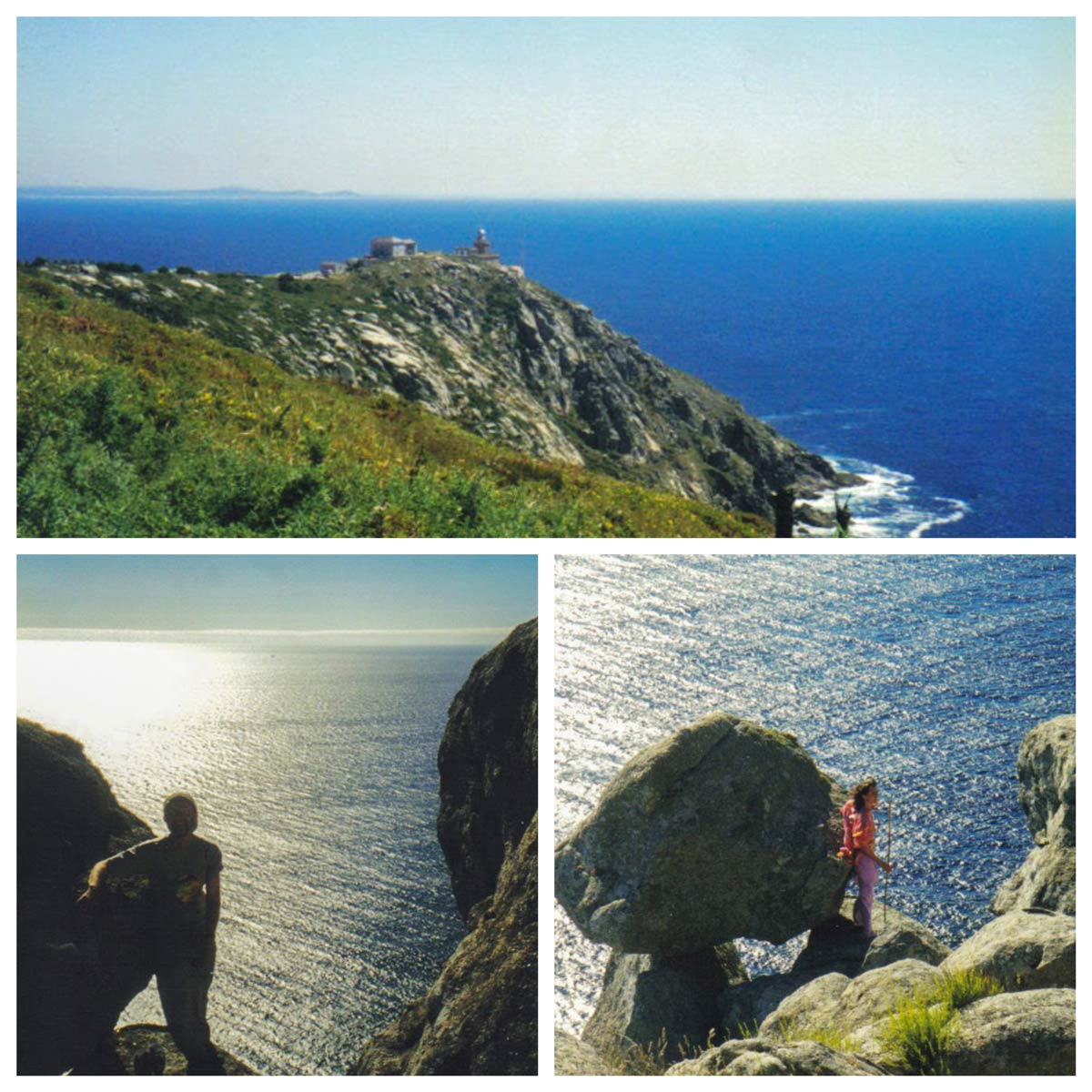
Eight hundred kilometres from the Pyrenees, at the shrine of Saint James in the city of Santiago de Compostela in Galicia, the northwestern province of Spain – though many pilgrims continue another hundred kilometres to Finisterre and Muxia, on the Atlantic coast.
4. Traditionally, why did pilgrims walk the Camino?
Because it was believed that the bones of Saint James were buried in Santiago. Christians were taught that he had the power to forgive their sins and answer their prayers. They also came to offer thanks or simply to deepen their faith.
5. How did Saint James’s body get to Spain?
It’s a miracle. Don’t ask.
6. Why do people walk the Camino today?
To know what it means to walk such a great distance. To be part of an ancient tradition. To escape the stress of modern life and slow down time. To rediscover their physical beings. To connect with other people. To feel close to nature. To search for meaning, authenticity, a rekindled sense of wonder. To renew faith, or to find it. To celebrate or mourn a passage in their lives (retirement, graduation, starting a job, leaving a job, marriage, divorce, the death of a loved one). For the exercise. For the challenge. For the culture. For a cheap holiday. For something to do.
7. So you don’t have to be religious to do the Camino?
Not at all. I’m not religious and I’ve never felt unwelcome. Of course many pilgrims are religious, but even believers are often on the Camino for reasons that you might call more spiritual than religious. That is to say, they’re looking for answers, rather than assuming they know the answers in advance. So where the Camino used to be a path of faith, it’s now a path of discovery, and open to all.

8. What first brought you to the Camino?
I always wanted to make a long journey on foot. I love walking and I thought I would meet interesting people and have adventures along the way. I wasn’t disappointed.
9. How many times have you done it now?
Seven, I think. A couple of them were patched together over more than a single year. My books are based on the walks I made in 1999, 2000, and 2004 – which qualifies them as historic documents! The Camino has changed that much in 20 years. I’ve also ventured on the caminos from Le Puy, Madrid and Lisbon, and walked to Finisterre and Muxia several times.
10. What brings you back?
I come back to see things I’ve missed; to relive moments, places, and flavours; to make discoveries, learn new lessons, relearn old ones.
11. Have you always gone alone?
Yes, every time except 2004 when I walked with my late wife, Michiko, for one week. She just wanted to know what it was all about. But it’s never hard to find people to walk with, if it’s company you crave.
12. If you’re not religious, can you really call yourself a pilgrim?
To a certain way of thinking, life is a pilgrimage, a journey from birth to death and perhaps beyond to an afterlife. So it’s not so much a question of calling yourself a pilgrim as perceiving yourself as one. The Camino is a part of life’s pilgrimage where that perception is formalized and made conscious for a few weeks.
13. Describe the Camino.
The Camino is a constantly changing and evolving landscape. You begin in the mountains, then come down through the hilly wine country. Next, you’re crossing the meseta, which is a kind of wide, dry prairie. There are two more low mountain ranges, and finally you’re in Galicia, which is rainy, green, fertile… A real Atlantic climate, not at all what you expect of Spain. In terms of human places, there are only a half-dozen real cities along the Camino, and they’re not so big: in the range of one to two hundred thousand people. The rest is gem-like villages and towns, full of architecture that dates back as far as the eleventh century.
14. How physically demanding is the Camino?
Not as demanding as you might think. There isn’t a lot of rough terrain or steep climbs. It’s more a matter of endurance: walking every day with a pack on your back, sometimes in extreme heat or rain. Some people are better built for that sort of thing than others; it often has nothing to do with muscle strength or age. Nearly 20 per cent of pilgrims completing the Camino in 2019 were over sixty.
15. How many people walk the Camino today?
In 2019, nearly 330,000 pilgrims arrived in Santiago on foot, having walked at least one hundred kilometres. About 20,000 more came by horse or bicycle, and 85 by wheelchair.
16. How long does it take to walk?
Most people can comfortably walk twenty- to twenty-five kilometre a day. At that pace it takes a few more than thirty days.
17. Where do you sleep?
There is a wide range of pilgrim lodgings, both public and private, at regular intervals along the way. They are usually clean, comfortable and co-ed. Some have cooking and laundry facilities and wi-fi, and all are great places to meet other pilgrims and find out whether they snore.
18. Is walking safe?
It used to be awfully dangerous, back in the good old days of wolves, bandits, floods, wars and plagues. Now it’s probably as safe as staying at home, though it’s still not a wise idea to cross the Pyrenees in winter. If you’re a woman, you’ll be reassured to know that, since 2018, so is the majority of pilgrims.
Hope you found that useful – if you have any comment or tips let me know! 🙂
You can buy my books on Amazon